
If you’re investing in a sunroom or patio enclosure, you want to enjoy it in January just as much as in July. The good news is that a well-built all-season room doesn’t have to mean high energy bills or a space you avoid once the temperature drops. Whether you’re planning a new build or want to get more comfort out of an existing enclosure, these energy efficiency tips will help you make the most of your investment year-round.
Click Here to Learn More About Custom Sunrooms From Screenbuilders
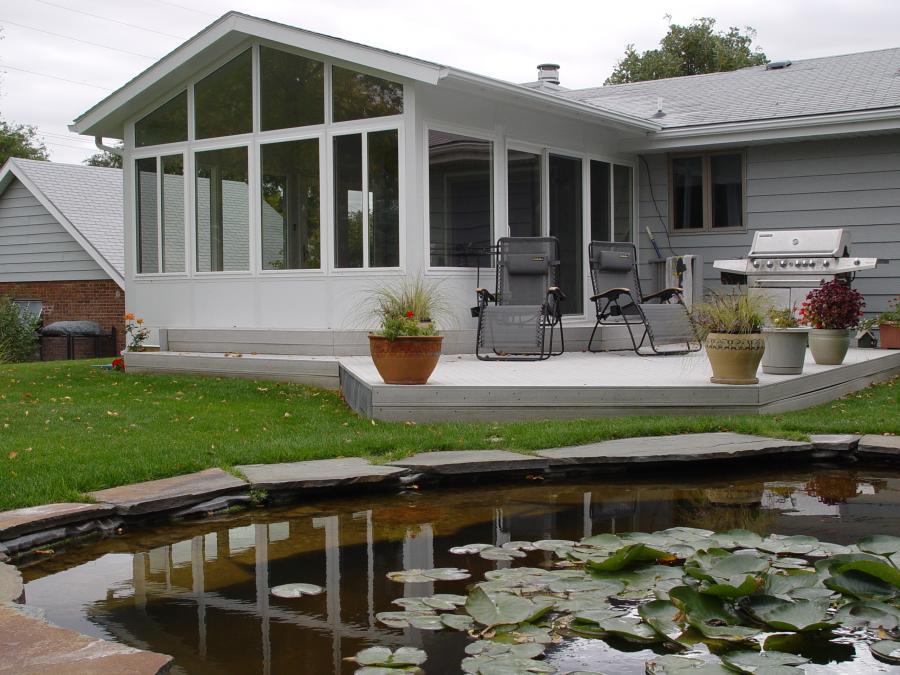
Start With the Right Glass and Glazing
The windows in your all-season room do more work than almost any other component when it comes to comfort and efficiency. Single-pane glass might save money upfront, but it lets heat escape in the winter and lets Iowa’s summer sun turn your room into a greenhouse.
Look for double-pane or triple-pane glass with a low-E (low emissivity) coating. This thin, invisible layer reflects infrared light, keeping heat inside during the winter and outside during the summer, without sacrificing the natural light that makes these rooms so appealing in the first place. For homeowners near Spirit Lake and the Okoboji area, where lake breezes and seasonal temperature swings are part of daily life, upgraded glazing packages make a noticeable difference in how usable the room feels across all four seasons.
Consider Insulated Framing Too
Glass gets most of the attention, but the frame matters just as much. Vinyl and insulated aluminum frames resist heat transfer far better than older, non-thermally-broken frames. If you’re comparing quotes for a new sunroom or evaluating an older enclosure for an upgrade, ask specifically about the frame’s thermal performance, not just the glass.
Insulate the Roof, Walls, and Foundation
A room is only as efficient as its weakest link, and for many three-season and all-season rooms, that weak link is the roof or knee walls rather than the windows. A properly insulated roof panel system keeps conditioned air from escaping upward, which is especially important in Northwest Iowa winters when cold air sinks and warm air rises straight out of a poorly insulated ceiling.
Knee walls (the short walls beneath the windows) and the foundation transition are common trouble spots. Gaps here let cold air creep in and can lead to condensation issues over time. When Screenbuilders designs an all-season room, insulation is built into the roof panels, walls, and foundation detailing from the start, rather than treated as an afterthought. If you’re retrofitting an existing three-season room into a true all-season space, this is usually the first area worth addressing.
Choose the Right Heating and Cooling Solution
Once your envelope (glass, frame, insulation) is solid, the next question is how you’ll heat and cool the space. All-season rooms typically use one of a few approaches: a mini-split ductless heat pump, a dedicated electric baseboard or radiant system, or in some cases, extending existing HVAC ductwork into the new space.
Mini-split systems have become a popular choice for Sioux City area homeowners because they’re efficient, don’t require ductwork, and let you control the temperature in the sunroom independently from the rest of the house. That means you’re not paying to heat or cool a room you’re not using, and you can dial in comfort precisely when you are. Whichever system you choose, sizing it correctly for the square footage and glass area of your specific room is critical. An oversized unit wastes energy; an undersized one will struggle on the coldest or hottest days.
Don’t Forget Ceiling Fans and Window Treatments
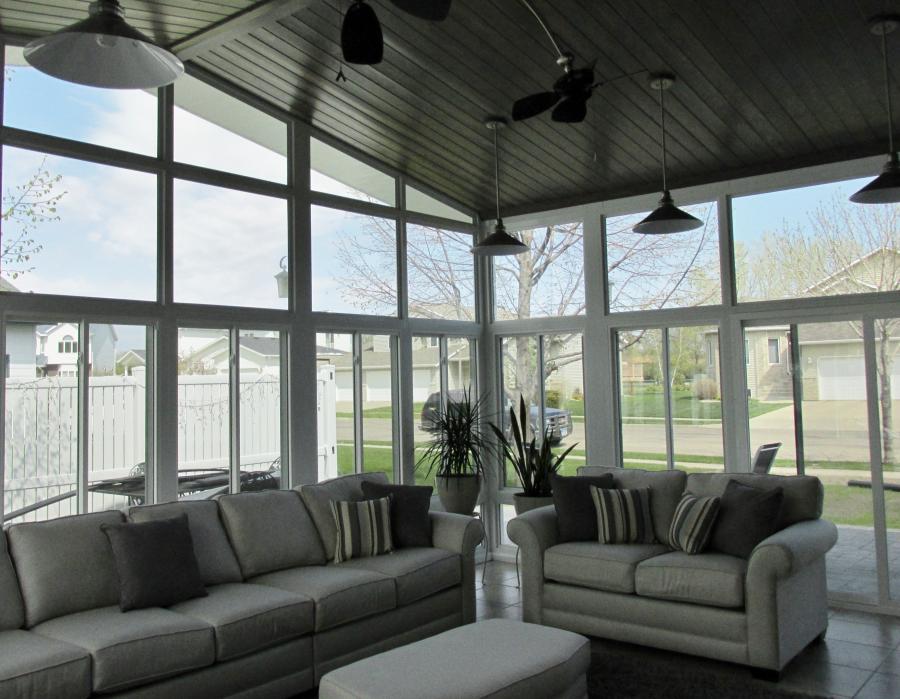
Simple additions like ceiling fans help circulate conditioned air so your heating or cooling system doesn’t have to work as hard. Cellular shades or solar screens on south- and west-facing windows can also cut down on unwanted summer heat gain significantly, giving you another layer of control without any added energy cost.
Seal Gaps and Maintain Weatherstripping
Even the best-designed room will lose efficiency over time if seals and weatherstripping around doors and window units aren’t maintained. Iowa’s freeze-thaw cycles can cause minor settling or shifting that opens up small gaps you might not notice until you feel a draft on a windy day.
A quick annual check of door sweeps, window seals, and the junction where the sunroom meets your home’s exterior wall can catch small issues before they become bigger energy drains. If you notice condensation between glass panes, that’s usually a sign the seal has failed, and the insulated glass unit needs replacing.
Final Thoughts
An energy-efficient all-season room means more than comfort — it means you’ll actually use the space you invested in, whether it’s early spring in Sioux City or the middle of a Spirit Lake winter. From glazing and framing to insulation and the right heating and cooling setup, every decision plays a role in how the room performs long after installation day.
If you’re ready to build a sunroom or patio enclosure designed for genuine year-round comfort in Northwest Iowa, the team at Screenbuilders can walk you through the options that make the most sense for your home and budget. Visit screenbuilders.com to request a free consultation and start planning your all-season room today.
Click Here to Learn More About Custom Sunrooms From Screenbuilders